
Independence Day Celebrations During the Civil War
Independence Day Celebrations During the Civil War
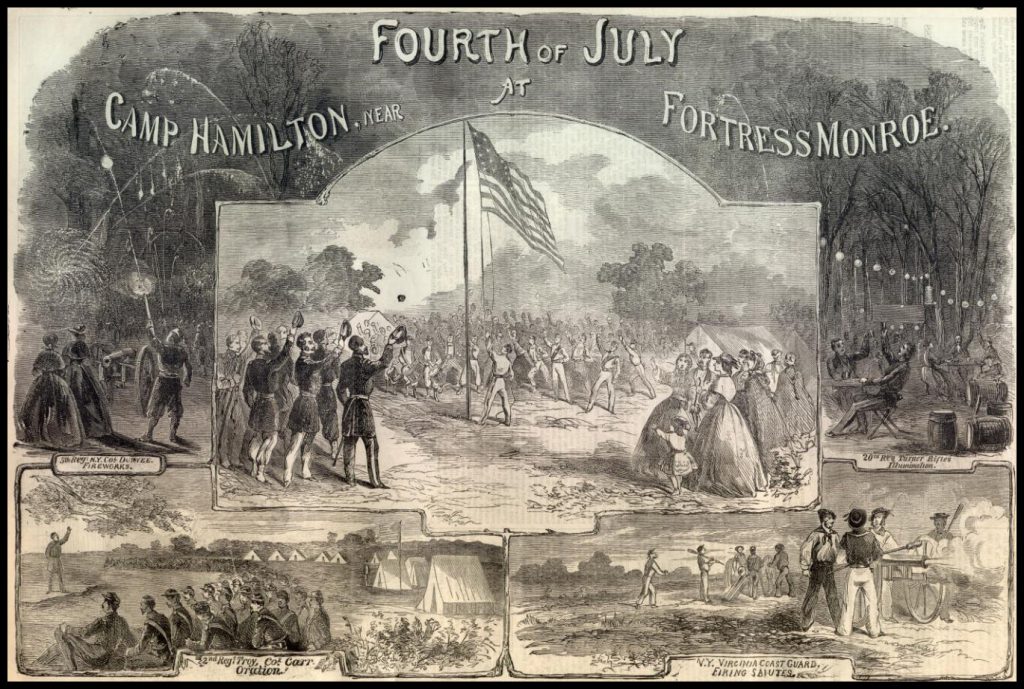
Independence Day has always been one of America’s most significant holidays, commemorating the signing of the Declaration of Independence and the birth of the United States. During the Civil War, however, Independence Day carried an even deeper meaning. As the nation struggled through its greatest internal conflict, Union soldiers, civilians, and political leaders looked to the ideals of 1776 for reassurance that the sacrifices being made would preserve the nation founded by the Declaration of Independence. Even in army camps, hospitals, and occupied cities, Americans found ways to celebrate the holiday with patriotic speeches, music, fireworks, and readings of the Declaration, reminding themselves what they were fighting to protect.
A Holiday That Meant More Than Ever
Before the Civil War, Independence Day was already one of the country’s largest public celebrations, complete with parades, speeches, militia drills, cannon salutes, and community gatherings. Once the war began, those traditions did not disappear—they simply moved into military camps and battlefields. Soldiers often celebrated with whatever resources they had available, creating ceremonies that mixed patriotism with much-needed recreation and fellowship.
For Union soldiers, the Fourth of July became an opportunity to reaffirm their commitment to preserving the Union. Public readings of the Declaration of Independence were common, as were patriotic songs like The Star-Spangled Banner and The Red, White, and Blue. Chaplains offered prayers, commanding officers delivered speeches, and soldiers reflected on the nation’s founding principles while many of their comrades were fighting—or dying—only a few miles away.
The Fourth of July in Camp, 1861
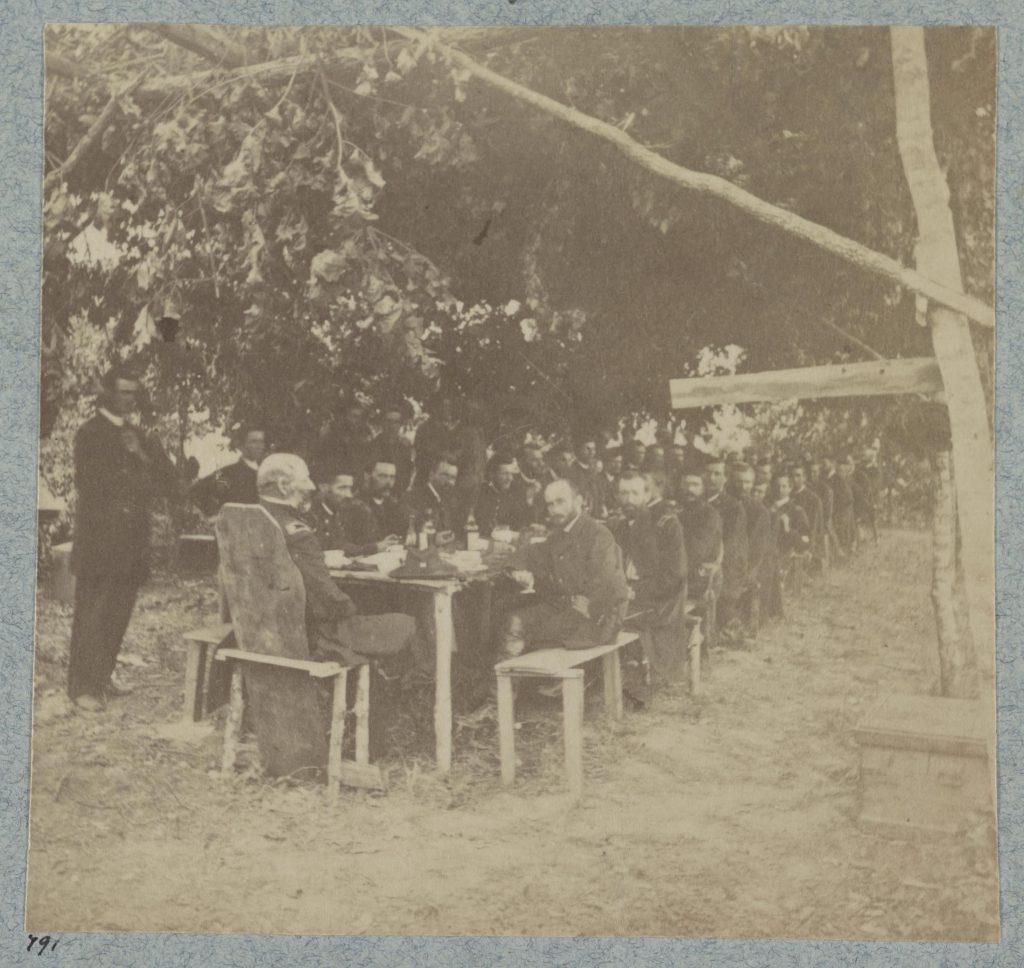
One of the most detailed firsthand descriptions comes from Sergeant Adoniram Judson Clark of the 1st New Jersey Infantry. Writing about July 4, 1861, while his regiment was stationed in Virginia, Clark described a full day of ceremonies that closely resembled hometown Independence Day celebrations.
He wrote:
“Well, hurrah for the Fourth! Turned out a little before 4 o’clock… at 5.30 or 6 o’clock we had a flag raising on the color line… Col. Johnson had hold of the rope and at the word, it was run to the top amid a hearty ‘3 times 3’ and for the first time floated on the breeze on Virginia soil.”
Following the flag raising, the regiment assembled for a formal patriotic program that included prayer, speeches, singing, and the public reading of the Declaration of Independence. Clark recorded the day’s order of events in remarkable detail:
“First in order of exercises, was singing, 2nd—prayer by chaplain, 3rd—speech by General Runyon, 4th—Reading of Declaration of Independence… after which were broken for the quarters.”
Although military discipline remained in place and no one was allowed to leave camp, the soldiers still enjoyed a festive holiday meal. Clark recalled:
“Our bill of fare was boiled ham, roast beef, bread pudding, picked beets, bread & butter, & iced lemonade. And, ‘after the cloth was removed,’—cigars.”
The day’s celebrations continued well into the evening. Soldiers improvised entertainment by throwing old tin canteens at one another in a mock battle before officers finally intervened. Clark remembered:
“At night there was all sorts of fun… for an hour had a pitched battle & the way the tin canteens flew was a caution!… In the eve we had a ‘fancy’ parade… Fireworks were not as plenty but we had some show.”
His account reveals that even during the first months of the war, soldiers sought moments of normalcy and joy while remaining deeply conscious of the patriotic significance of the holiday.
Independence Day in a Military Hospital
By July 4, 1863, the war had become far bloodier, yet soldiers continued to celebrate wherever they found themselves. Charles William Hobbs of the 13th New Hampshire Infantry spent Independence Day recovering at Columbian Hospital in Washington, D.C., but even a hospital proved to be an unlikely place for celebration.
Hobbs described the festivities with humor:
“The 4th passed off here very well. We had speeches, singing &c. in the day and fireworks in the evening.”
Like many soldiers, however, the official entertainment was not quite enough. Hobbs continued:
“The soldiers not contented with the fireworks they had been through amused themselves by firing rockets and other kinds of fireworks at each other and on the whole we had quite a lively time.”
Despite the fun, his letter also reveals the homesickness many soldiers experienced. Reflecting on earlier celebrations before the hardships of war, he wrote:
“I thought of Island Pond and of some of those that were there a good many times on our Hospital 4th.”
His words capture both the festive atmosphere and the longing for home that accompanied many wartime holidays.
July 4, 1863: A Day That Changed the War
No Independence Day during the Civil War was more significant than July 4, 1863. While Americans celebrated across the North, two of the war’s greatest victories arrived almost simultaneously.
On July 3, General Robert E. Lee’s final assault at Gettysburg—known as Pickett’s Charge—had failed. By July 4, Lee began retreating back toward Virginia, ending his invasion of the North. That same day, after a lengthy siege, the Confederate stronghold at Vicksburg surrendered to General Ulysses S. Grant, giving the Union complete control of the Mississippi River.
Many Americans immediately recognized the symbolic importance of these victories occurring on the nation’s birthday. Newspapers, politicians, and soldiers alike viewed the events as evidence that the principles of the Declaration of Independence would ultimately prevail. The victories at Gettysburg and Vicksburg transformed July 4, 1863, into one of the most celebrated Independence Days in American history.
Celebrations in Occupied Vicksburg
The surrender of Vicksburg itself became part of the Fourth of July celebration. Union soldiers entered the city as citizens emerged from weeks of bombardment and life in caves dug into the surrounding hillsides. Patriotic music filled the streets, flags appeared throughout the city, and soldiers marked both military victory and national independence at the same time.
Although many residents remained bitter over the city’s surrender, Union troops celebrated with enthusiasm. The coincidence of Vicksburg’s surrender on Independence Day strengthened Northern morale and became a powerful symbol that the Union itself would survive the rebellion.
Remembering the Ideals of 1776
Throughout the Civil War, Independence Day served as more than a festive holiday. It reminded soldiers why they endured hardship, separation from family, and the dangers of battle. Reading the Declaration of Independence, raising the American flag, singing patriotic songs, and gathering with fellow soldiers reinforced the belief that they were preserving the nation established in 1776.
The firsthand letters of Adoniram Judson Clark and Charles William Hobbs show that even amid uncertainty, soldiers sought moments of celebration, fellowship, and hope. Whether enjoying a special meal in camp, watching fireworks over Washington, or witnessing one of the war’s greatest victories at Vicksburg, Americans found ways to honor Independence Day even in the darkest years of the nation’s history.
Their celebrations remind us that the Fourth of July has never simply commemorated the nation’s founding—it has also celebrated the enduring effort to preserve the ideals upon which the United States was built.
Bibliography
To learn more about how Independence Day was celebrated during the Civil War, visit the Research Arsenal and select “Photographs and Images” or “Letters and Diaries” and try searching for keywords such as “Independence Day,” “Fourth of July,” or even “fireworks” and see what you can find!
Clark, Adoniram Judson. Letter dated July 4, 1861. Research Arsenal Digital Collections. https://app.researcharsenal.com/imageSingleView/87315
Emerging Civil War. A Word About Independence Day in the Civil War. https://emergingcivilwar.com/2012/07/04/a-word-about-independence-day-in-the-civil-war/
Emerging Civil War. July 4, 1863: This Most Eventful Day to the American People. https://emergingcivilwar.com/2023/07/04/july-4-1863-this-most-eventful-day-to-the-american-people/
Hobbs, Charles William. Letter dated July 4, 1863. Research Arsenal Digital Collections. https://app.researcharsenal.com/imageSingleView/40966
Teaching American History. Peculiar Recognitions: Unexplainable Events on the Fourth of July. https://teachingamericanhistory.org/peculiar-recognitions-unexplainable-events-on-the-fourth-of-july/
Visit Vicksburg. Celebrating Independence Day. https://www.visitvicksburg.com/blog/celebrating-independence-day/
