
The Angry Archivist: Opening a Pandora’s Box of Archival Problems
The Angry Archivist: Opening a Pandora’s Box of Archival Problems
The Angry Archivist hasn’t had too much to be angry about lately, but a recent Colorado unboxing video of a time capsule changed all that. In the past I’ve discussed the myriad of archival problems I’ve discovered in various collections (like tracing over original Civil War letters), but watching one unfold in a news video was a new experience.
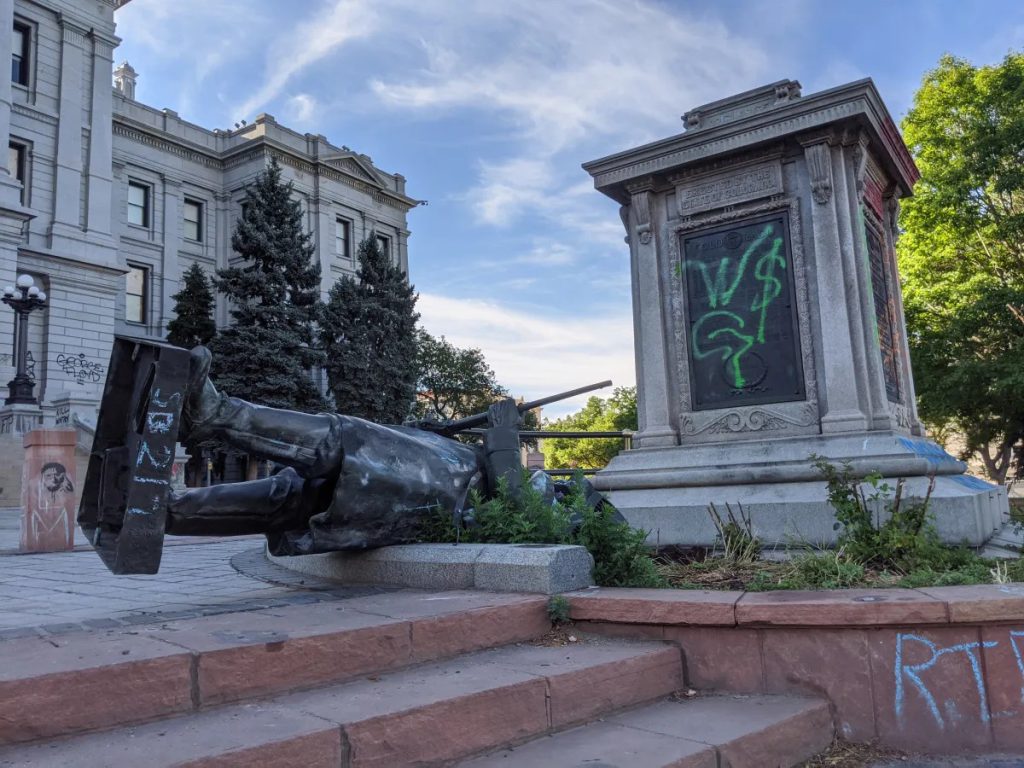
In recent news, History Colorado just opened a time capsule that had been placed under a Civil War monument. The “On Guard” monument itself had been damaged and toppled during protests in 2020 and was removed. Plans are in place to move the statue to a new location on land owned by the Department of Veterans and Military Affairs. The monument of the Union soldier representing the 1st Colorado Cavalry was installed in 1909 at the Colorado State Capitol and that is when the time capsule was placed. In a PR move, History Colorado opened the box live with Colorado Governor Jared Polis. Take a look at this video and see if you notice any issues. Here is the link to the video of the unboxing: https://www.cbsnews.com/colorado/video/gov-jared-polis-opens-box-from-1907-found-underneath-statue-at-colorado-state-capitol/
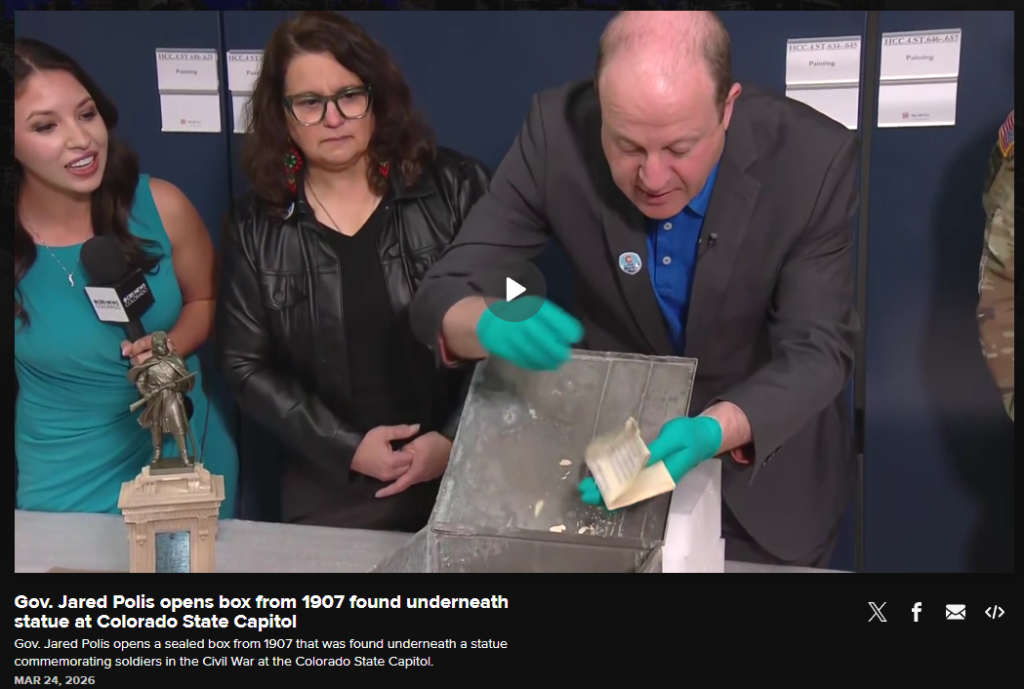
First off, there’s no way of knowing what was sealed inside that time capsule. They were opening something that was essentially completely unknown. If you look in the background, you will see that they are opening it inside what appears to be their collections room. At first glance, that might make sense. Afterall, they are opening a box of artifacts. Here’s why that’s a bad idea: they have no idea what is in that box or the condition of those items. And as you watch the video, you will notice that the governor pulls out a book with very obvious water and black mold damage. Mold spores do not “die” when they dry out, they simply become dormant and can be dormant for decades or even hundreds of years before reactivating with the introduction of moisture. Having black mold in your collection room is a serious problem. Any trained curator will not even consider bringing an object with black mold into their collections room without mitigating the mold first.
The second issue is that they are letting the governor remove the contents from the box. Obviously, Governor Polis is not a trained archivist and as you watch the video, you’ll see him pull papers out that essentially just fall apart, raining historic archival “confetti” across the table. As soon as the lid was opened, any removal of documents should have been done by a trained professional for the safety of the documents. Once things disintegrate into confetti, there’s really no way back from that.
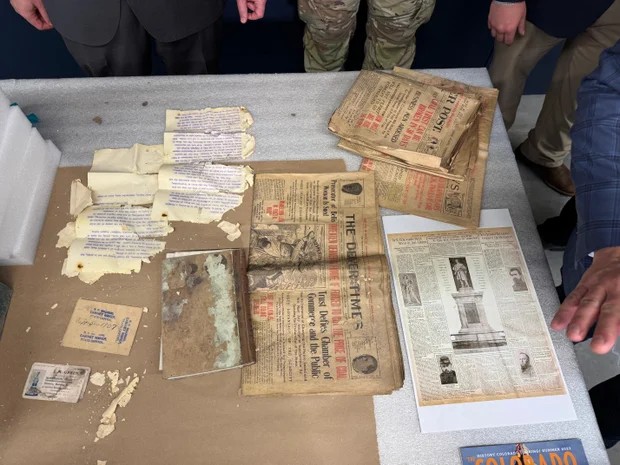
I mention this video because I think it’s important for those of us in this field to always be on the lookout for ways to improve—even the professionals. I am guessing the reason there were so many archival issues with this “unboxing” video was because the governor was there. However, politician or not, the first duty should be to the artifacts and archives themselves. Unfortunately, in this video you can see those documents being damaged in real time by someone who was not qualified to handle them. Opening the box in a collections room introduced the very real risk of black mold into their collection. In addition, the book had very visible black mold to the camera, and it tends to spread like wildfire, meaning it has probably spread throughout all of those documents that were in the time capsule box.
In some cases, especially when documents have not been properly stored for the last over 100 years, it is natural to expect some damage. However, as museum professionals, we strive to minimize that as much as possible by taking proper steps and care to treat them as the fragile pieces of history that they are. The moral of this story is to always be careful when introducing new items into your collection, make sure they don’t have black mold! And just because someone is the governor, don’t let them handle your collection (especially the fragile pieces). Oh, and please don’t make origami out of your historic documents!
